Building a tradition of nonviolent action for peace and justice in Charlottesville, Va., since 1983.
Charlottesville Center for Peace and Justice
Who We Are
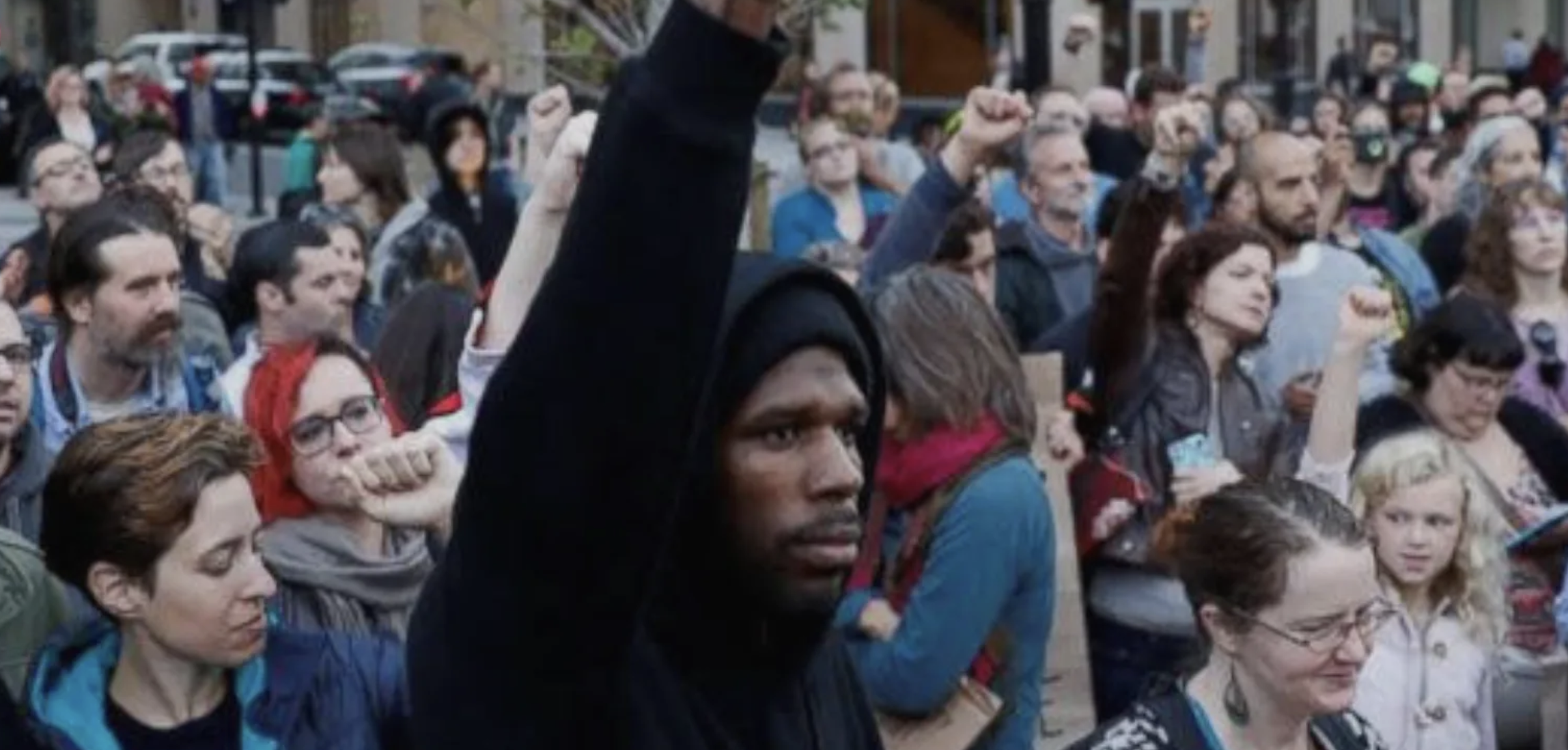
For over forty years, the Charlottesville Center for Peace and Justice (CCPJ) has created a tradition of nonviolent advocacy for peace and justice. We work to end violence in all its forms, including racism, sexism, economic impoverishment, environmental destruction, mass incarceration, gun violence, and war.
CCPJ was founded in 1983 when community members came together to counter the Cold War arms race and threat of nuclear war. Since then, our mission for peace and nonviolence has expanded to embrace many connected social and political issues.
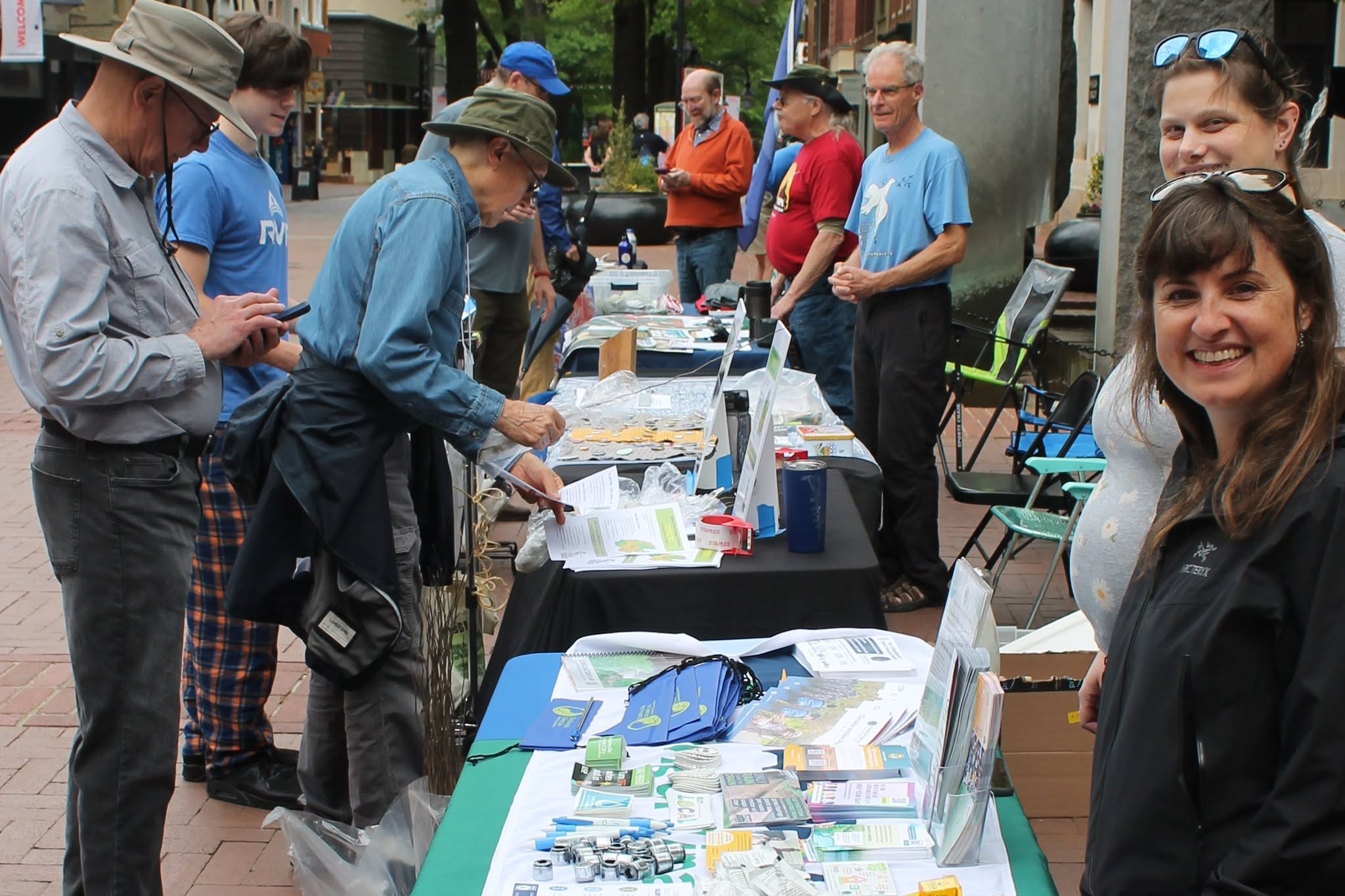
CCPJ recognizes the links between war and injustice. Through events like our annual community gathering we bring local organizations together and foster collaboration.


Upcoming Events
Monthly Meeting
Sept. 6, 2026
Our monthly meetings are open to all and begin at 3:30 with socializing, followed by a 4:00 start of the meeting. Join us at
Friends Meeting House
1104 Forest Avenue
Charlottesville, Virginia
Charlottesville Vegan Fest
Sept. 13, 2026
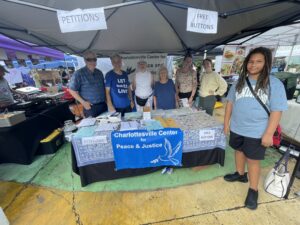
We will be at the IX Park from 11 a.m. to 4 p.m.
Take Action
Sign Petition to City Council to Support Ending Wars
Why Pass Local Resolutions
Among the resolutions passed by Charlottesville City Council are these:
1971 End the War on Vietnam
1973 Condemning Nixon’s freeze on affordable housing funding
1981 For funding for defense lawyers for indigent
1981 In support of Equal Rights Amendment
1982 For nuclear disarmament
1983 For nuclear disarmament
1984 Against Apartheid in South Africa (First in U.S. South.)
2000 For abolishing the death penalty in Virginia (First in Virginia.)
2003 Against attacking Iraq
2003 Against the PATRIOT Act
2004 For the repeal of same-sex marriage bans
2006 Against same-sex marriage bans
2007 End the War on Iraq
2008 Flying Tibetan flag
2012 No War on Iran (First in U.S.)
2012 For clean elections
2013 No drones (First in U.S.)
2015 In support of convention for elimination of discrimination against women
2017 For citizenship for immigrants
2017 For moving the money from militarism to human needs
2019 Divestment from Weapons and Fossil Fuels
2020 No War on Iran
2020 Demilitarizing the Charlottesville police
2024 For a ceasefire in Gaza
The most common objection to local resolutions on national topics is that it is not a proper role for a locality. This objection is easily refuted. Passing such a resolution is a moment’s work that costs a locality no resources.
Americans are supposed to be directly represented in Congress. Their local and state governments are also supposed to represent them to Congress. A representative in Congress represents over 650,000 people — an impossible task.Most city council members in the United States take an oath of office promising to support the U.S. Constitution. Representing their constituents to higher levels of government is part of how they do that.
Cities and towns routinely and properly send petitions to Congress for all kinds of requests. This is allowed under Clause 3, Rule XII, Section 819, of the Rules of the House of Representatives. This clause is routinely used to accept petitions from cities, and memorials from states, all across America. The same is established in the Jefferson Manual, the rule book for the House originally written by Thomas Jefferson for the Senate.
In 1798, the Virginia State Legislature passed a resolution using the words of Thomas Jefferson condemning federal policies penalizing France.
In 1967 a court in California ruled (Farley v. Healey , 67 Cal.2d 325) in favor of citizens’ right to place a referendum on the ballot opposing the Vietnam War, ruling: “As representatives of local communities, board of supervisors and city councils have traditionally made declarations of policy on matters of concern to the community whether or not they had power to effectuate such declarations by binding legislation. Indeed, one of the purposes of local government is to represent its citizens before the Congress, the Legislature, and administrative agencies in matters over which the local government has no power. Even in matters of foreign policy it is not uncommon for local legislative bodies to make their positions known.”
Abolitionists passed local resolutions against U.S. policies on slavery. The anti-apartheid movement did the same, as did the nuclear freeze movement, the movement against the PATRIOT Act, the movement in favor of the Kyoto Protocol (which includes at least 740 cities), etc. Our democratic republic has a rich tradition of municipal action on national and international issues.
Karen Dolan of Cities for Peace writes: “A prime example of how direct citizen participation through municipal governments has affected both U.S. and world policy is the example of the local divestment campaigns opposing both Apartheid in South Africa and, effectively, the Reagan foreign policy of “constructive engagement” with South Africa. As internal and global pressure was destabilizing the Apartheid government of South Africa, the municipal divestment campaigns in the United States ramped up pressure and helped to push to victory the Comprehensive Anti-Apartheid Act of 1986. This extraordinary accomplishment was achieved despite a Reagan veto and while the Senate was in Republican hands. The pressure felt by national lawmakers from the 14 U.S. states and close to 100 U.S. cities that had divested from South Africa made the critical difference. Within three weeks of the veto override, IBM and General Motors also announced they were withdrawing from South Africa.”
Watch us argue for a resolution on March 20, 2017:
This content is blocked because it would connect to YouTube.
Our Latest News
CCPJ Commemorated Hiroshima – Nagasaki
August 9, 2026
CCPJ commemorated the 81st anniversaries of the nuclear bombings of Hiroshima and Nagasaki on August 8, 2026, by tabling on...
Read More →